Keynote Speakers

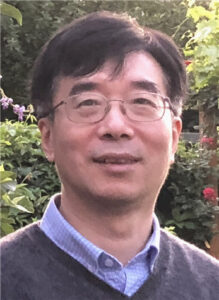
Prof. Zidong Wang
MAE, MEASA, FIEEE
Dept. of Computer Science
Brunel University of London
From Big Data to Big Science: The Transformative Role of LLMs

Abstract: The rise of Large Language Models (LLMs) and the explosion of big data are redefining how we discover knowledge. This talk explores the powerful convergence of big data analytics and LLM intelligence, highlighting how LLMs can act as scientific co-pilots to help with data processing, hypothesis generation, code automation, experimental documentation, and cross-disciplinary knowledge integration. By addressing limitations such as hallucination, energy cost, and domain adaptation, we look toward a future where human expertise and machine reasoning collaborate at scale. This synergy opens a new era of Big Science, enabling transparent, reproducible, and more creative discovery across scientific domains.

Biography: Zidong Wang is currently a Chair Professor at Brunel University London, UK, a Fellow of the European Academy of Sciences, a Fellow of the European Academy of Sciences and Arts, an IEEE Fellow, and the Editor-in-Chief of Neurocomputing, International Journal of Systems Science, Systems Science & Control Engineering, as well as International Journal of Network Dynamics and Intelligence. For many years, he has been engaged in research in control theory, machine learning, and bioinformatics, and has published a number of international papers in SCI-indexed journals with an H-index of 158. He is a holder of major research grants from the UK and the European Union.
foto
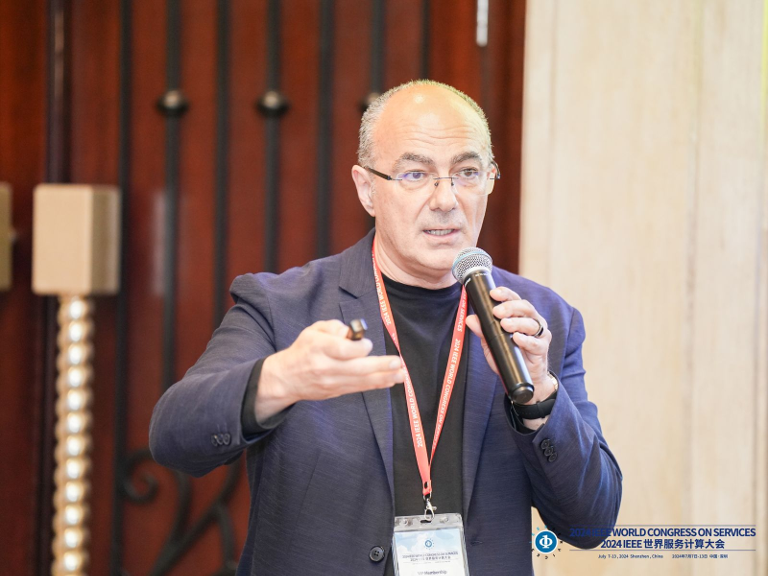
Prof. Schahram Dustdar
FIEEE, FAAIA
Head of the Distributed Systems Group
TU Wien, Austria.

Active Inference for Distributed Intelligence in the Computing Continuum

Abstract: Modern distributed systems must operate under uncertainty, across environments, infrastructures, and applications that vary widely. Within the Computing Continuum (IoT–Edge–Fog–Cloud), applying neuroscience-inspired principles and mechanisms may help us build more flexible solutions that can generalize across diverse settings. Intriguing hypotheses in neuroscience propose that many brain functions in humans and animals arise from a small number of powerful principles. If these hypotheses hold, they could offer deep insight into how humans and animals cope with unpredictable events—and even support imagination. In this talk, we explore how Active Inference, alongside established design principles for modern distributed systems—such as elasticity, predictive equilibrium, and antifragility—can enable Distributed Intelligence across the Computing Continuum.
 
Biography: Schahram Dustdar is a Full Professor of Computer Science at TU Wien, where he leads the Distributed Systems Group, and he is also affiliated as an ICREA research professor at Universitat Pompeu Fabra (UPF) in Barcelona. (https://dustdar.prof) He is widely known for pushing the frontier of elastic, dependable cloud-to-edge systems and the Computing Continuum, turning cutting-edge research into practical foundations for modern distributed intelligence. An IEEE Fellow, ACM Distinguished Scientist/Speaker, and member of Academia Europaea, he’s a sought-after keynote speaker recognized for shaping how large-scale systems adapt, scale, and stay resilient in the real world.
Conference Organizer and Sponsor: Technical Sponsors:
|
CIS'2026