
Keynote Speakers
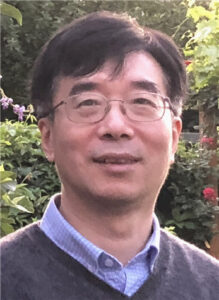
MAE, MEASA, FIEEE
Dept. of Computer Science
Brunel University of London
From Big Data to Big Science: The Transformative Role of LLMs
Abstract: The rise of Large Language Models (LLMs) and the explosion of big data are redefining how we discover knowledge. This talk explores the powerful convergence of big data analytics and LLM intelligence, highlighting how LLMs can act as scientific co-pilots to help with data processing, hypothesis generation, code automation, experimental documentation, and cross-disciplinary knowledge integration. By addressing limitations such as hallucination, energy cost, and domain adaptation, we look toward a future where human expertise and machine reasoning collaborate at scale. This synergy opens a new era of Big Science, enabling transparent, reproducible, and more creative discovery across scientific domains.
Biography: Zidong Wang is currently a Chair Professor at Brunel University London, UK, a Fellow of the European Academy of Sciences, a Fellow of the European Academy of Sciences and Arts, an IEEE Fellow, and the Editor-in-Chief of Neurocomputing, International Journal of Systems Science, Systems Science & Control Engineering, as well as International Journal of Network Dynamics and Intelligence. For many years, he has been engaged in research in control theory, machine learning, and bioinformatics, and has published a number of international papers in SCI-indexed journals with an H-index of 158. He is a holder of major research grants from the UK and the European Union.

FIEEE, FAAIA
Head of the Distributed Systems Group
TU Wien, Austria.
Active Inference for Distributed Intelligence in the Computing Continuum
Abstract: Modern distributed systems must operate under uncertainty, across environments, infrastructures, and applications that vary widely. Within the Computing Continuum (IoT–Edge–Fog–Cloud), applying neuroscience-inspired principles and mechanisms may help us build more flexible solutions that can generalize across diverse settings. Intriguing hypotheses in neuroscience propose that many brain functions in humans and animals arise from a small number of powerful principles. If these hypotheses hold, they could offer deep insight into how humans and animals cope with unpredictable events—and even support imagination. In this talk, we explore how Active Inference, alongside established design principles for modern distributed systems—such as elasticity, predictive equilibrium, and antifragility—can enable Distributed Intelligence across the Computing Continuum.
Biography: Schahram Dustdar is a Full Professor of Computer Science at TU Wien, where he leads the Distributed Systems Group, and he is also affiliated as an ICREA research professor at Universitat Pompeu Fabra (UPF) in Barcelona. (https://dustdar.prof) He is widely known for pushing the frontier of elastic, dependable cloud-to-edge systems and the Computing Continuum, turning cutting-edge research into practical foundations for modern distributed intelligence. An IEEE Fellow, ACM Distinguished Scientist/Speaker, and member of Academia Europaea, he’s a sought-after keynote speaker recognized for shaping how large-scale systems adapt, scale, and stay resilient in the real world.

FIEEE
Head and Chair Professor of Computational Intelligence
PolyU, Hong Kong.
Self-Evolving Intelligence: A Roadmap Toward Autonomous AI Ecosystems
Abstract: The next generation of artificial intelligence will not be engineered as static artifacts, but will emerge as autonomous ecosystems capable of self-directed growth, continual adaptation, and open-ended evolution. In this talk, a framework for Self-Evolving Autonomous AI Systems is presented, in which intelligence arises from the symbiotic interaction between heterogeneous agents and the algorithms that govern them, driven by large-scale evolutionary computation.
At the core of this framework lies a simple yet powerful principle: intelligence should not be embodied in a single monolithic model, but distributed across a population of cooperating multi-agent systems. Supported by large-scale, scalable evolutionary infrastructure, these agents interact through dynamic graph structures to transfer knowledge, specialize, reorganize, and merge in response to new tasks. Beyond model evolution, the algorithms responsible for learning, coordination, and adaptation are themselves subject to meta-level evolution, enabling the system to continually redesign how it learns and reasons.
This talk unfolds in three stages. First, the conceptual and mathematical foundations of self-evolving intelligence will be presented, framing autonomous AI systems as co-evolving populations of models and algorithms governed by multi-level evolutionary dynamics. Second, I will demonstrate how recent advances provide essential building blocks for this paradigm, including accelerated evolutionary computation, evolutionary model merging, and automated algorithm designs. Finally, some open challenges for realizing autonomous AI ecosystems will be discussed, such as stable long-term evolution, verifiable algorithmic safety, and adaptive protocols that respect hardware and privacy constraints.
At the core of this framework lies a simple yet powerful principle: intelligence should not be embodied in a single monolithic model, but distributed across a population of cooperating multi-agent systems. Supported by large-scale, scalable evolutionary infrastructure, these agents interact through dynamic graph structures to transfer knowledge, specialize, reorganize, and merge in response to new tasks. Beyond model evolution, the algorithms responsible for learning, coordination, and adaptation are themselves subject to meta-level evolution, enabling the system to continually redesign how it learns and reasons.
This talk unfolds in three stages. First, the conceptual and mathematical foundations of self-evolving intelligence will be presented, framing autonomous AI systems as co-evolving populations of models and algorithms governed by multi-level evolutionary dynamics. Second, I will demonstrate how recent advances provide essential building blocks for this paradigm, including accelerated evolutionary computation, evolutionary model merging, and automated algorithm designs. Finally, some open challenges for realizing autonomous AI ecosystems will be discussed, such as stable long-term evolution, verifiable algorithmic safety, and adaptive protocols that respect hardware and privacy constraints.
Biography: Professor Kay Chen Tan is the founding Head and Chair Professor of Computational Intelligence at the Department of Data Science and Artificial Intelligence at The Hong Kong Polytechnic University. He has co-authored eight books and published over 300 peer-reviewed journal articles in the fields of computational intelligence and evolutionary computation. His works have collectively been cited more than 40,000 times, and he has an h-index of 100. His contributions to the scientific community have garnered him various accolades, including being named an IEEE Fellow and a Hong Kong RGC Senior Research Fellow. Additionally, he has consistently ranked among the World’s Top 2% Most-Cited Scientists by Stanford University and has been recognized as a Highly Cited Researcher in 2024 and 2025 by Clarivate.
Professor Tan has held numerous key editorial and leadership positions, including Chair of the IEEE CIS Fellow Evaluating Committee (2027) and Vice President for Publications (2021–2024) of the IEEE Computational Intelligence Society (CIS). He served as Editor-in-Chief of the IEEE Transactions on Evolutionary Computation (2015–2020) and the IEEE Computational Intelligence Magazine (2010–2013), and currently acts as Chief Co-Editor of the Springer Book Series on Machine Learning: Foundations, Methodologies, and Applications.
Professor Tan has been recognized with various awards, such as the IEEE CIS Evolutionary Computation Pioneer Award (2026), the IEEE CEC Best Paper Award (2025), the IEEE CAI Best Paper Award (2024), the IEEE Computational Intelligence Magazine Outstanding Paper Award (2024, 2019), the IEEE Andrew P. Sage Best Transactions Paper Award (2020), the IEEE Transactions on Neural Networks and Learning Systems Outstanding Paper Award (2016), and the IEEE CIS Outstanding Early Career Award (2012). Beyond research excellence, Professor Tan has delivered over 80 plenary and keynote lectures and co-organized more than 60 international conferences, including his roles as General Co-Chair for the 2019 IEEE Congress on Evolutionary Computation and the 2016 IEEE World Congress on Computational Intelligence.
Professor Tan has held numerous key editorial and leadership positions, including Chair of the IEEE CIS Fellow Evaluating Committee (2027) and Vice President for Publications (2021–2024) of the IEEE Computational Intelligence Society (CIS). He served as Editor-in-Chief of the IEEE Transactions on Evolutionary Computation (2015–2020) and the IEEE Computational Intelligence Magazine (2010–2013), and currently acts as Chief Co-Editor of the Springer Book Series on Machine Learning: Foundations, Methodologies, and Applications.
Professor Tan has been recognized with various awards, such as the IEEE CIS Evolutionary Computation Pioneer Award (2026), the IEEE CEC Best Paper Award (2025), the IEEE CAI Best Paper Award (2024), the IEEE Computational Intelligence Magazine Outstanding Paper Award (2024, 2019), the IEEE Andrew P. Sage Best Transactions Paper Award (2020), the IEEE Transactions on Neural Networks and Learning Systems Outstanding Paper Award (2016), and the IEEE CIS Outstanding Early Career Award (2012). Beyond research excellence, Professor Tan has delivered over 80 plenary and keynote lectures and co-organized more than 60 international conferences, including his roles as General Co-Chair for the 2019 IEEE Congress on Evolutionary Computation and the 2016 IEEE World Congress on Computational Intelligence.

Foreign Member of Chinese Academy of Engineering (CAE), FIEEE
Dean of the School of Data Science
Lingnan University, Hong Kong.
Non‑linear PID Control: Paradigm Shift from Linear Regulation to Nonlinear Dynamic Shaping
Abstract: Widely used in industry, conventional PID relies on linear‑system assumptions and suffers obvious performance loss against nonlinearities, time‑variations, unmodeled dynamics and severe disturbances, limiting high‑precision applications.
This talk highlights inherent drawbacks of linear PID and linearization‑based control, and presents core ideas, evolution and advantages of nonlinear PID. Departing from fixed‑gain linear feedback, nonlinear PID employs state‑dependent nonlinear feedback to handle system nonlinearities without linear approximation. This paradigm shift achieves better transient behavior, robustness and tracking accuracy under complex conditions. Challenges and engineering outlooks are briefly summarized for advanced PID design of nonlinear industrial systems.
This talk highlights inherent drawbacks of linear PID and linearization‑based control, and presents core ideas, evolution and advantages of nonlinear PID. Departing from fixed‑gain linear feedback, nonlinear PID employs state‑dependent nonlinear feedback to handle system nonlinearities without linear approximation. This paradigm shift achieves better transient behavior, robustness and tracking accuracy under complex conditions. Challenges and engineering outlooks are briefly summarized for advanced PID design of nonlinear industrial systems.
Biography: YONGDUAN SONG is currently Dean of the School of Data Science, Lingnan University, and Director of the Artificial Intelligence Institute, Chongqing University. He is an IEEE Fellow and International Member of the Chinese Academy of Engineering, as well as a US‑registered professional engineer.
He has authored 12 monographs and over 400 journal papers, and holds more than 100 patents. He has served as an associate editor for multiple prestigious journals including IEEE Transactions on Automatic Control and IEEE Transactions on Intelligent Transportation Systems. Currently, he serves as the Editor‑in‑Chief of IEEE Transactions on Neural Networks and Learning Systems. His research interests cover advanced control theory, artificial intelligence and their practical applications.
| Conference Organizer and Sponsor: | Technical Sponsors: | |||||
|---|---|---|---|---|---|---|
 | | |  |  |  | ||
| CISec'2026 | ||||||